
Let’s Do Surgery APPENDECTOMY™
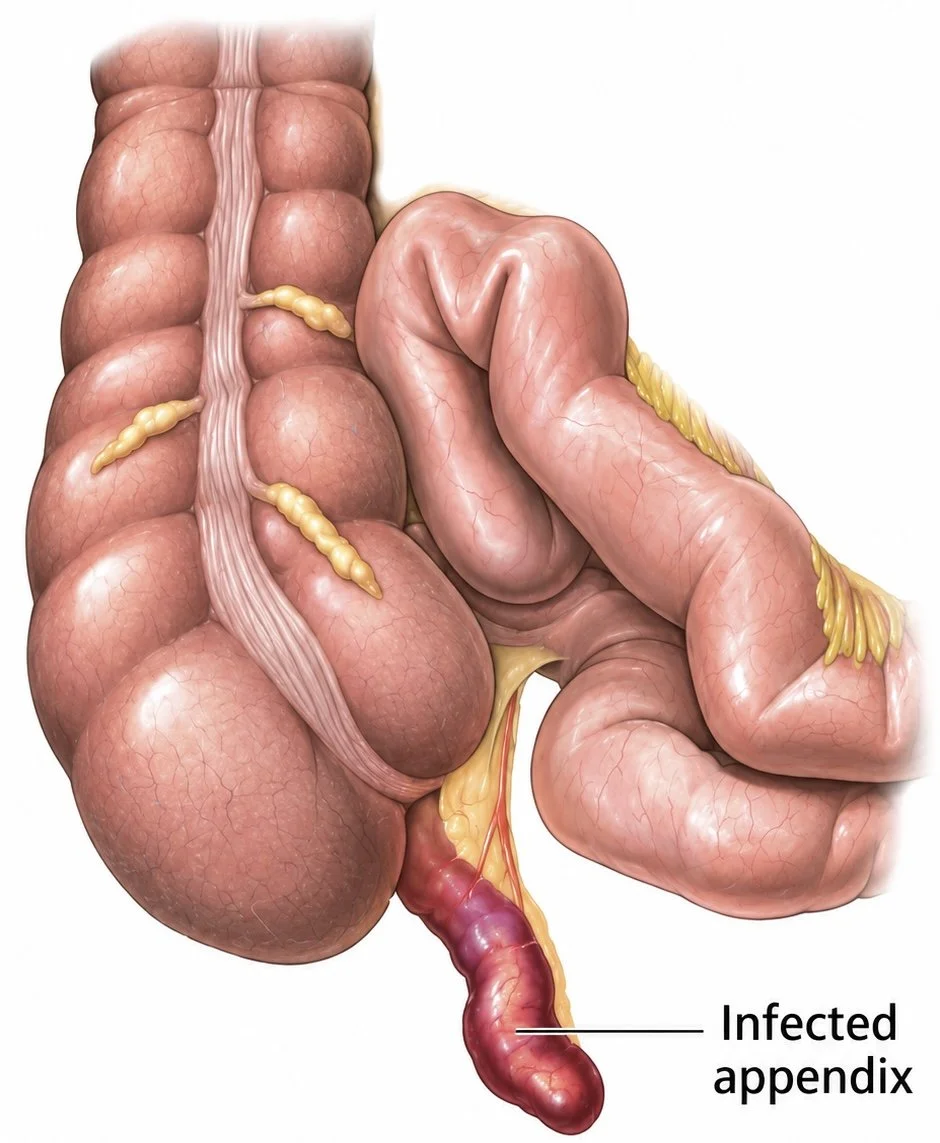
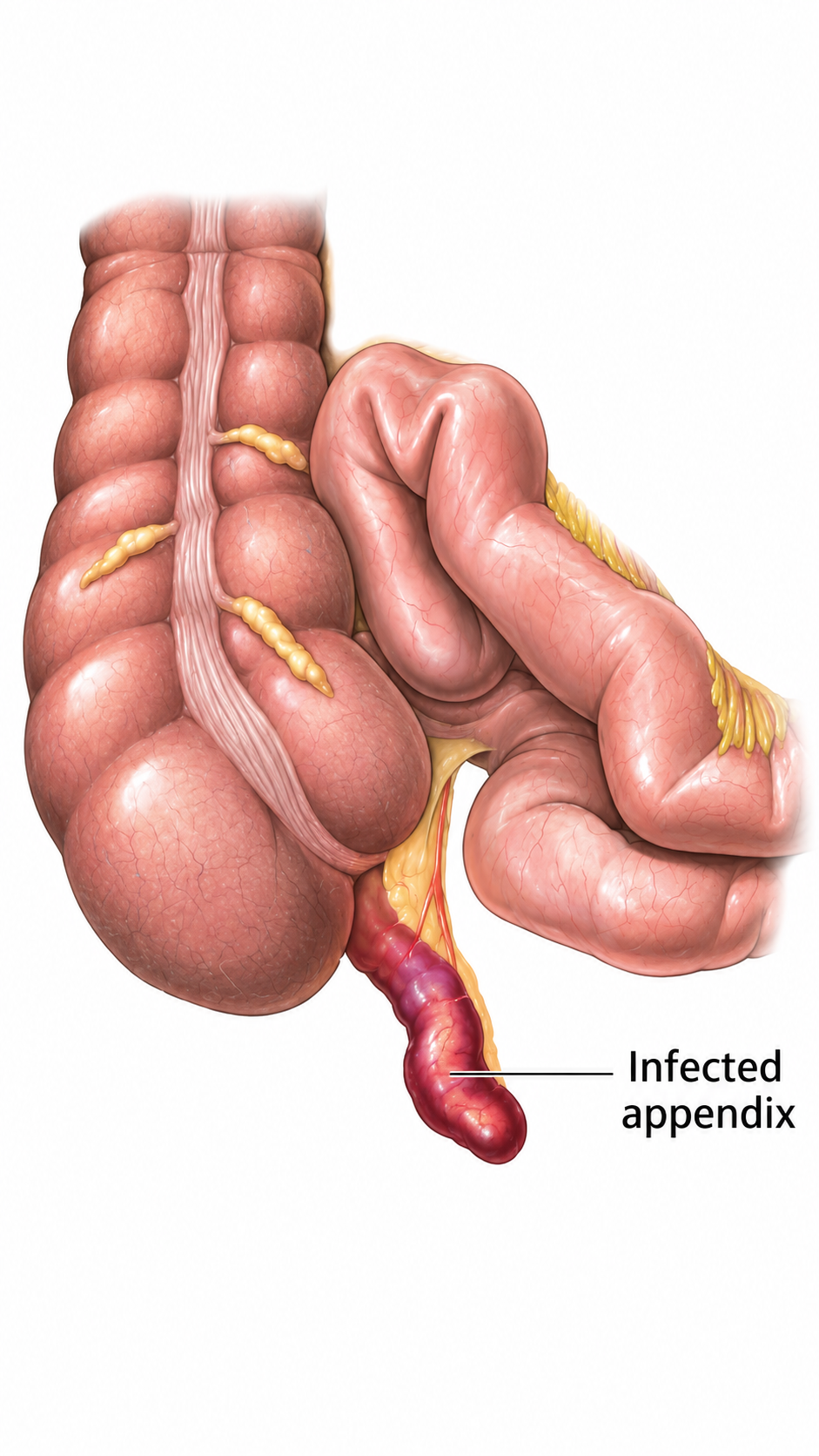
An appendectomy removes an inflamed or infected appendix. The surgeon identifies the appendix, safely separates and seals its blood supply, closes the appendix at its connection to the large intestine, and removes it from the abdomen.
Appendectomy Digital Module
An appendectomy is a surgical procedure to remove the appendix, a small tube-shaped organ attached to the first part of the large intestine.
-
The most common reason for an appendectomy is appendicitis, which happens when the appendix becomes swollen, infected, or blocked. If untreated, the appendix can rupture and spread infection inside the abdomen.
Why Surgery Is Needed
Surgery may be needed when:
The appendix is inflamed or infected
Pain is worsening, usually in the lower right abdomen
Imaging or lab tests suggest appendicitis
There is concern for rupture, abscess, or spreading infectionTypes of Appendectomy
Laparoscopic Appendectomy
Small incisions are made, and a camera is used to remove the appendix. This is the most common approach.Open Appendectomy
One larger incision is made in the lower right abdomen. This may be used if the appendix has ruptured, there is severe infection, or the case is more complex.Robotic Appendectomy
A surgeon controls robotic instruments through small incisions. This may be used in select hospitals, but laparoscopic surgery remains the standard approach.Patient Summary
An appendectomy removes the infected appendix, helps prevent rupture, and treats the source of infection. Most patients recover well, especially when surgery is done before the appendix bursts.
-
An appendectomy focuses on a small organ called the appendix. The appendix is a narrow, finger-shaped pouch attached to the beginning of the large intestine.
Key Anatomy
Appendix
A small tube connected to the cecum. When it becomes blocked, swollen, or infected, it can cause appendicitis.Cecum
The first part of the large intestine. The appendix comes off the cecum.Small Intestine
Food passes from the small intestine into the cecum.Large Intestine / Colon
The bowel continues upward from the cecum into the colon.Right Lower Abdomen
The appendix is usually located in the lower right side of the belly.Blood Supply
The appendix receives blood from a small vessel called the appendiceal artery.Why Anatomy Matters
The surgeon must safely identify the appendix, separate it from nearby bowel and tissue, control its blood supply, and remove it without injuring surrounding organs.
Simple Patient Explanation
“The appendix is attached to the first part of your large intestine. During surgery, the surgeon finds the appendix, seals off its blood supply and base, removes it, and checks the surrounding area for infection or inflammation.”
-
Appendectomy Digital Module
Section 3: Disease States
LDS Format – Patient Intelligence Layer
Simple • Visual • Trust-Building • EducationalSECTION 3 — DISEASE STATES
What Diseases and Conditions Lead to an Appendectomy?
An appendectomy is performed when the appendix becomes inflamed, infected, damaged, or potentially dangerous to the patient’s health. While acute appendicitis is the most common reason, several other disease states may require removal of the appendix.
PATIENT-FACING VERSION
Why Would My Appendix Need To Be Removed?
The appendix is a small tube attached to the beginning of the large intestine. When it becomes blocked, swollen, infected, or damaged, it can cause severe pain and become a medical emergency.
Common disease states include:
1. Acute Appendicitis (Most Common)
What is it?
Sudden inflammation and infection of the appendix.What causes it?
Stool blockage (fecalith)
Swelling of lymph tissue
Infection
Rare tumors
Obstruction of the appendix opening
Typical Symptoms
Pain near the belly button moving to the lower right abdomen
Loss of appetite
Nausea and vomiting
Fever
Abdominal tenderness
Pain with walking or coughing
Why surgery is needed
If untreated, the appendix can burst (rupture) and spread infection throughout the abdomen.
2. Perforated (Ruptured) Appendicitis
What is it?
The appendix has burst or developed a hole.
Why it matters
This is a serious emergency because bacteria and infection spill into the abdomen.
Symptoms
Severe abdominal pain
Fever
Chills
Abdominal swelling
Rapid heart rate
Ill appearance
Treatment
Usually:
Emergency appendectomy
Antibiotics
Abdominal washout/drainage
3. Gangrenous Appendicitis
What is it?
Blood supply to the appendix becomes compromised, causing tissue death.
What happens?
The appendix becomes:
Dark
Dying
Highly prone to rupture
Why surgery is urgent
Dead tissue cannot recover and infection can spread rapidly.
4. Appendiceal Abscess
What is it?
A pocket of infection or pus forms around the appendix.
Sometimes the body walls off infection instead of allowing rupture to spread.
Symptoms
Fever
Persistent abdominal pain
Fatigue
Elevated white blood cell count
Treatment options
Depending on severity:
Drain abscess first
Antibiotics
Delayed appendectomy (interval appendectomy)
Immediate surgery in selected cases
5. Chronic or Recurrent Appendicitis
What is it?
Repeated or long-standing inflammation of the appendix.
Less common but can cause:
Recurrent RLQ pain
Intermittent nausea
Episodes mistaken for GI problems
Treatment
Appendectomy may be recommended if symptoms persist.
6. Appendiceal Tumors and Cancer (Rare)
What is it?
Abnormal growth within the appendix.
Examples:
Neuroendocrine tumor (carcinoid)
Mucinous neoplasm
Adenocarcinoma
Often discovered:
During surgery
On pathology after appendectomy
On CT scan
Treatment
May involve:
Appendectomy alone
Larger colon surgery
Oncology consultation
7. Mucocele of the Appendix
What is it?
The appendix fills with mucus and enlarges.
Can be:
Benign
Pre-cancerous
Cancerous
Why remove it?
Rupture can spread mucus-producing cells into the abdomen.
Patient Takeaway
Most appendectomies occur because of appendicitis—but not all appendicitis is the same.
Early treatment often prevents:
✔ Rupture
✔ Severe infection
✔ Longer hospitalization
✔ More complicated surgery -
Appendectomy Digital Module
Section 4: Pre-Op Workup
LDS Format – Patient Intelligence + Professional Intelligence
Simple • Visual • Trust-Building • Step-by-StepSECTION 4: PRE-OP WORKUP
Patient-Facing Version
“What Happens Before My Appendectomy?”
Before an appendectomy, your healthcare team performs a pre-operative (pre-op) workup to confirm the diagnosis, understand your overall health, and prepare you safely for surgery.
The goals of the pre-op workup are to:
✔ Confirm appendicitis
✔ Determine if surgery is needed
✔ Identify complications such as rupture or abscess
✔ Choose the safest surgical approach
✔ Reduce surgical and anesthesia risks
✔ Prepare you physically and emotionally for surgeryStep 1: Medical History
Your surgeon and medical team will ask questions about your symptoms and health history.
Common questions include:
Symptoms
When did the pain begin?
Where did it start?
Has the pain moved?
Is it getting worse?
Any nausea or vomiting?
Fever or chills?
Loss of appetite?
Diarrhea or constipation?
Past Medical History
Previous surgeries
Heart or lung disease
Diabetes
Kidney disease
Bleeding disorders
Pregnancy status (if applicable)
Medication Review
Bring a complete list of medications.
Important medications include:
Blood thinners
Aspirin
Diabetes medications
Steroids
Weight-loss medications
Herbal supplements
Allergy Review
Especially:
Medication allergies
Antibiotics
Latex
Adhesives
Contrast dye allergies
Step 2: Physical Examination
The physical exam helps confirm appendicitis and assess severity.
Common findings include:
Abdominal Tenderness
Pain is usually located in the right lower abdomen.
Typical findings:
Tenderness
Guarding
Muscle tightening
Rebound pain
Classic Appendicitis Signs
McBurney’s Point Tenderness
Pain over the appendix area.
Rebound Tenderness
Pain increases when pressure is released.
Rovsing Sign
Pressing on the left side causes pain on the right.
Psoas Sign
Pain when moving the right hip.
Obturator Sign
Pain with internal hip rotation.
Vital Signs
The team checks:
Temperature
Blood pressure
Heart rate
Respiratory rate
Oxygen levels
Fever and elevated heart rate may suggest infection.
Step 3: Laboratory Testing
Blood and urine tests help confirm infection and prepare for surgery.
Common tests include:
Test Purpose
CBC Infection / white blood cell count
CMP/BMP Electrolytes and kidney function
CRP Inflammation
Coagulation Studies Bleeding risk
Urinalysis Rule out urinary causes
Pregnancy Test Important for women of childbearing age
Blood Type & Screen Possible transfusion preparation
What These Tests Tell Us
Infection severity
Hydration status
Organ function
Surgical safety
Alternative diagnoses
Step 4: Imaging Studies
Imaging confirms the diagnosis and helps surgeons plan treatment.
CT Scan (Most Common in Adults)
A CT scan is highly accurate for diagnosing appendicitis.
It can show:
Enlarged appendix
Inflammation
Fluid
Perforation
Abscess
Nearby bowel involvement
Benefits
High accuracy
Fast diagnosis
Surgical planning
Ultrasound
Often used for:
Children
Pregnant patients
Patients avoiding radiation
Can identify:
Enlarged appendix
Fluid
Inflammation
MRI
Used selectively:
Pregnancy
Complex cases
Radiation avoidance
Step 5: Surgical Risk Assessment
The team evaluates overall readiness for anesthesia and surgery.
Areas assessed include:
Heart Evaluation
Cardiac history
Prior heart procedures
Blood pressure
Cardiac clearance if needed
Lung Evaluation
Smoking history
COPD or asthma
Oxygen needs
Airway evaluation
Anesthesia Evaluation
The anesthesia team reviews:
Previous anesthesia history
Difficult airway history
Sleep apnea
Nausea risk
Medication reactions
Typical anesthesia:
General Anesthesia
You are asleep and pain-free during surgery.
Step 6: IV Access and Fluid Resuscitation
Appendicitis often causes dehydration.
Before surgery, patients usually receive:
IV fluids
Electrolyte correction
Pain management
Anti-nausea medication
Goals:
Stabilize circulation
Improve hydration
Prepare for anesthesia
Step 7: Antibiotic Preparation
Antibiotics are commonly given before surgery.
Purpose:
Reduce infection risk
Treat active infection
Lower abscess formation risk
Common antibiotics may include:
Cefazolin + Metronidazole
Cefoxitin
Broad-spectrum therapy if rupture suspected
Step 8: NPO Status (Nothing by Mouth)
Before anesthesia, patients are usually asked:
Do not eat or drink.
This is called NPO.
Why?
During anesthesia, stomach contents could enter the lungs.
Typical guidance:
No solid food
Limited clear liquids depending on timing
Emergency surgery protocols may vary
Step 9: Surgical Consent and Education
Before surgery, the surgeon explains:
Why surgery is recommended
Benefits
Risks
Alternatives
Expected recovery
Common appendectomy risks:
Bleeding
Infection
Injury to bowel
Abscess
Hernia
Conversion to open surgery
• Rare anesthesia complications
-
Procedure Approaches for Appendectomy
Understanding How the Appendix Can Be Removed
An appendectomy is the surgical removal of the appendix. There are different ways surgeons can perform this procedure depending on the patient’s condition, anatomy, infection severity, and surgeon preference.
The goal is always the same:
✔ Remove the diseased appendix
✔ Treat infection
✔ Prevent rupture and complications
✔ Help the patient recover safelyThe three main approaches are:
Laparoscopic Appendectomy
Robotic Appendectomy
Open Appendectomy
1. Laparoscopic Appendectomy
“Small incisions and camera-guided surgery”
What is it?
A laparoscopic appendectomy uses small incisions and a tiny camera to remove the appendix.
This is the most common approach used today.
How it works
The surgeon:
Makes 3–4 small incisions
Inflates the abdomen with CO₂ gas
Inserts a camera and surgical instruments
Identifies the appendix
Removes the appendix through a small port
Closes the incisions
Benefits
✔ Smaller scars
✔ Less pain
✔ Shorter hospital stay
✔ Faster recovery
✔ Lower wound infection risk
✔ Better visualization of the abdomenPossible Risks
• Bleeding
• Infection
• Injury to bowel or nearby organs
• Abscess formation
• Conversion to open surgery if neededRecovery
Most patients:
• Go home same day or next day
• Return to light activity in several days
• Full recovery often 1–3 weeksLDS Patient Insight
Why many surgeons prefer laparoscopy:
The camera provides a wide internal view and allows surgeons to inspect the entire abdomen, especially useful when the diagnosis is uncertain or infection has spread.
2. Robotic Appendectomy
“Robot-assisted minimally invasive surgery”
What is it?
A robotic appendectomy is a minimally invasive procedure performed using robotic technology controlled by the surgeon.
The robot does not operate on its own—the surgeon controls every movement.
Common robotic systems include:
• 3D camera platform
• Wristed instruments
• Surgeon console controlHow it works
The procedure is similar to laparoscopy but uses robotic arms.
Steps:
Small ports placed
Robotic system docked
Surgeon operates from console
Enhanced 3D visualization used
Appendix dissected and removed
Ports removed and incisions closed
Potential Advantages
✔ High-definition 3D view
✔ Greater instrument precision
✔ Improved dexterity
✔ Enhanced ergonomics for surgeon
✔ Useful in complex anatomy or obese patientsConsiderations
Robotic surgery may involve:
• Longer setup time
• Increased equipment costs
• Limited availability in some hospitalsRecovery
Recovery is usually similar to laparoscopic surgery.
Most patients:
• Same-day or overnight stay
• Return to activities within days
• Full recovery approximately 1–3 weeksLDS Patient Insight
Robotic surgery is another minimally invasive option and may be used when surgeons feel the technology provides advantages for visualization or precision.
3. Open Appendectomy
“Traditional surgery through a larger incision”
What is it?
An open appendectomy uses a larger incision in the lower right abdomen to remove the appendix directly.
This was historically the standard approach and remains important today.
How it works
The surgeon:
Makes an incision in the right lower abdomen
Opens tissue layers
Locates the appendix
Removes the appendix
Cleans infection if present
Closes the incision
When Open Surgery May Be Needed
Open surgery may be preferred when:
• Appendix has ruptured
• Severe infection or abscess present
• Dense scar tissue exists
• Extensive inflammation
• Previous surgeries complicate access
• Emergency conditions require rapid exposure
• Minimally invasive surgery is unsafeBenefits
✔ Direct surgical access
✔ Effective in severe infection
✔ Reliable for complicated casesLimitations
Compared with minimally invasive surgery:
• Larger scar
• More discomfort
• Longer hospital stay
• Higher wound infection risk
• Longer recoveryRecovery
Typical recovery:
• Hospital stay 1–3+ days
• Light activity several weeks
• Full recovery 2–6 weeksLDS Patient Comparison Table
Feature Laparoscopic Robotic Open
Incision Size Small Small Larger
Camera Guidance Yes Advanced 3D Limited
Pain Less Less More
Recovery Faster Faster Longer
Hospital Stay Short Short Longer
Cost Moderate Higher Variable
Complex Infection Sometimes Sometimes Often preferred
-
“What Happens To Me Step-by-Step?”
Simple • Visual • Trust-Building
An appendectomy removes the appendix, usually because it is inflamed or infected (appendicitis). Most procedures today are performed using minimally invasive (laparoscopic or robotic) surgery.
Step 1: Arrival and Pre-Operative Preparation
When you arrive at the hospital or surgery center:
What Happens:
Registration and consent forms
Review of your medical history
IV line started
Blood work and imaging reviewed
Meeting with:
Surgeon
Anesthesia provider
Nursing team
You May Receive:
IV fluids
Antibiotics
Pain medication
Anti-nausea medication
Goal:
Prepare your body safely for surgery and confirm the surgical plan.
Step 2: Transfer to the Operating Room
You are taken to the operating room (OR).
What You Will See:
Surgical lights
Monitors
Surgical team
Equipment and instruments
Safety Checks:
The team performs a Time-Out:
Confirming:
Your identity
Procedure
Surgical site
Allergies
Antibiotics given
Equipment readiness
Goal:
Prevent errors and ensure surgical safety.
Step 3: Anesthesia
Most appendectomies use general anesthesia.
What Happens:
Medication through IV
You fall asleep
Breathing tube placed
Continuous monitoring
Monitored Throughout Surgery:
Heart rate
Blood pressure
Oxygen level
Temperature
Breathing
Goal:
Keep you comfortable, asleep, and pain-free.
Step 4: Positioning and Surgical Prep
After anesthesia:
Position:
Usually supine (lying flat).
Safety Measures:
Arms padded and secured
Pressure points protected
Compression devices placed on legs
Skin Preparation:
The abdomen is cleaned with sterile solution.
Common prep agents:
Chlorhexidine
Iodine-based prep
Goal:
Reduce infection risk and protect your body.
Step 5: Incision and Access to the Abdomen
The surgeon gains access to the abdomen.
Laparoscopic/Robotic Surgery:
Usually:
Small belly button incision
2–3 additional small ports
Open Surgery:
Single incision in the lower right abdomen.
Carbon Dioxide (CO₂):
Gas gently inflates the abdomen to create working space.
Goal:
Create a safe pathway to the appendix.
Step 6: Finding the Appendix
The surgical team locates the appendix.
The appendix is attached to the:
Cecum
Beginning of the large intestine
Right lower abdomen
What the Surgeon Looks For:
Swelling
Infection
Pus
Perforation
Abscess
Surrounding inflammation
Goal:
Confirm disease severity.
Step 7: Appendix Removal
The appendix is separated and removed.
Surgical Steps:
Identify appendix
Control blood supply (mesoappendix)
Seal or divide vessels
Secure appendix base
Remove appendix
Devices Often Used:
Staplers
Endoloops
Energy devices
Clips
Appendix Removal:
Placed into a specimen retrieval bag and removed.
Goal:
Safely remove infected tissue.
Step 8: Inspection and Irrigation
After removal:
The surgeon inspects the abdomen.
Looking For:
Bleeding
Infection
Injury
Fluid collections
If Needed:
Sterile saline irrigation may be used.
Goal:
Leave a clean, safe surgical field.
Step 9: Closure
Ports or incision are closed.
Closure May Include:
Fascial closure
Sutures
Skin glue
Steri-Strips
Staples (sometimes)
Dressings Applied:
Sterile bandages
Waterproof coverings
Goal:
Promote healing and protect the wound.
Step 10: Recovery Room (PACU)
You wake up in the:
Post-Anesthesia Care Unit (PACU)
Nurses Monitor:
Pain
Breathing
Blood pressure
Nausea
Surgical sites
Common Experiences:
Sleepiness
Mild soreness
Shoulder discomfort (CO₂ gas)
Dry throat
Goal:
Safe recovery from anesthesia.
Step 11: Going Home or Hospital Stay
Most Laparoscopic Cases:
Same-day discharge
orOvernight stay
Complicated Cases:
May require:
IV antibiotics
Longer monitoring
Drain management
Additional imaging
Recovery Timeline:
24–48 hrs: Walking/light activity
1 week: Improving soreness
2–4 weeks: Return to normal activityGoal:
Safe healing and recovery.
B. Professional-Facing Version
Surgical Workflow – Appendectomy
Operative Workflow
1. Preoperative Verification
History and physical
Imaging confirmation
Labs reviewed
Informed consent
Surgical site verification
Antibiotic administration
DVT prophylaxis
2. OR Setup and Positioning
Position:
Supine
Arms tucked or extended
Slight Trendelenburg
Left tilt often used
Equipment:
Laparoscopic tower
Insufflator
Camera system
Energy platform
Suction/irrigation
Stapler availability
3. Induction and Airway
General anesthesia
Endotracheal intubation
Foley (select cases)
Orogastric tube (optional)
4. Abdominal Access
Pneumoperitoneum:
Common methods:
Veress needle
Open (Hasson)
Target:
12–15 mmHg CO₂
Port Placement (Typical Laparoscopic):
Umbilical camera port
LLQ working port
Suprapubic or RLQ assistant port
5. Diagnostic Exploration
Evaluate:
Appendix
Cecum
Terminal ileum
Pelvis
Alternate pathology
Assess:
Simple appendicitis
Gangrenous appendicitis
Perforation
Abscess
Generalized contamination
6. Appendix Mobilization
Identify:
Cecal taeniae
Appendix base
Mesoappendix
Mesoappendix Division:
Using:
Bipolar energy
Vessel sealer
Harmonic device
Clips
7. Appendiceal Base Control
Methods:
Stapler
Endoloop
Ligature
Avoid:
Cecal injury
Inadequate stump
Fecal contamination
8. Specimen Retrieval
Appendix placed into:
Endoscopic retrieval bag
Removed via:
Umbilical port
Enlarged extraction site if necessary
9. Irrigation and Hemostasis
Selective irrigation:
Indications:
Purulence
Perforation
Contamination
Confirm:
Hemostasis
Secure stump
No enterotomy
No bleeding
10. Desufflation and Closure
Closure:
Fascial closure (>10 mm sites)
Subcutaneous closure if indicated
Skin:
Monocryl
Dermabond
Staples
11. Postoperative Management
PACU:
Pain control
PONV management
Ambulation
Diet advancement
Discharge Criteria:
Hemodynamic stability
Pain controlled
Oral intake tolerated
Ambulation
No concerning findings
LDS Visual / Animation Layer
Suggested 3D Animation Sequence:
OR entry and anesthesia
Patient positioning and prep
Port placement
CO₂ insufflation
Appendix identification
Mesoappendix dissection
Appendix stapling/division
Retrieval bag extraction
Irrigation and inspection
Closure and recovery
Interactive LDS Features:
“Follow My Surgery” Timeline
3D Appendix Anatomy Explorer
Laparoscopic vs Open toggle
Instrument hover-over explanations
Voice-guided ‘Day in the Life of Surgery’ walkthrough
LDS Principle:
Communication is the lifeline of care — We Don’t Just Inform, We Connect. -
For appendectomy, the “Critical View of Safety” means the surgeon should clearly confirm the appendix, the base of the appendix, the cecum, the terminal ileum, and the mesoappendix before cutting or stapling anything.
Unlike cholecystectomy, appendectomy does not have one universally named “Critical View of Safety,” but the same safety principle applies:
Identify the anatomy. Confirm the target. Protect nearby structures. Divide only what is clearly understood.
Patient-Facing Version
What does “Critical View of Safety” mean?
Before removing the appendix, the surgeon must make sure they are looking at the correct structure.
The appendix is attached to the beginning of the large intestine, called the cecum. Nearby are important structures, including the small intestine, blood vessels, and sometimes inflamed or infected tissue.
The surgeon carefully checks:
Where the appendix begins
Where it attaches to the cecum
Where the blood supply is
That nearby bowel is protected
That it is safe to remove the appendix
Why is this important?
Appendicitis can cause swelling, infection, pus, abscess, or perforation. This can make the anatomy harder to see.
The safety check helps reduce the risk of:
Injury to the cecum
Injury to the small intestine
Bleeding from the appendiceal artery
Leaving part of the appendix behind
Stapling or cutting the wrong tissue
Infection or leak after surgery
Step-by-Step Safety Check
Step 1: Find the appendix
The surgeon locates the appendix, usually attached to the cecum in the lower right abdomen.
Step 2: Follow it to the base
The surgeon follows the appendix back to where it connects to the cecum.
Step 3: Identify the mesoappendix
The mesoappendix is the tissue that carries the blood supply to the appendix.
Step 4: Control the blood supply
The appendiceal artery is sealed, clipped, divided, or stapled.
Step 5: Secure the base
The base of the appendix is closed with a stapler, loop, clip, or suture.
Step 6: Remove the appendix
The appendix is placed in a specimen bag and removed from the abdomen.
-
What Is the Device and Supply Stack?
During an appendectomy, the surgical team uses a carefully selected combination of:
Equipment – large systems and technology used in the operating room
Instruments – handheld or robotic surgical tools
Supplies – disposable items used during the procedure
Energy Devices – tools used to cut tissue and stop bleeding
Closure Materials – products used to seal and protect the body after surgery
Every appendectomy is built around a device and supply stack designed to make surgery:
✓ Safer
✓ More precise
✓ Less invasive
✓ Faster to recover fromOperating Room Technology Used During Appendectomy
An appendectomy may be performed using laparoscopic, robotic, or open techniques.
Technology varies depending on the approach.
Core Operating Room Equipment
1. Surgical Table
The patient lies on an adjustable operating room table that allows positioning for optimal abdominal access.
Purpose:
Safe positioning
Pressure protection
Exposure of the lower abdomen
2. Anesthesia System
A complete anesthesia workstation manages:
Breathing
Oxygen delivery
Ventilation
Monitoring during surgery
Common components:
Ventilator
Gas delivery system
Airway equipment
Physiologic monitoring
3. Visualization System
Surgeons operate using high-definition imaging.
This may include:
HD laparoscopic camera
3D robotic visualization
Large video monitors
Purpose:
Magnified internal view
Better precision
Improved anatomy recognition
4. CO₂ Insufflation System
For minimally invasive appendectomy, carbon dioxide gas gently inflates the abdomen.
Purpose:
Creates working space
Improves visibility
Allows safe instrument movement
Surgical Instruments
Instruments Used During Appendectomy
The surgeon uses specialized instruments to:
Grasp tissue
Retract structures
Dissect tissue
Seal blood vessels
Remove the appendix
Common instruments include:
Graspers
Hold and manipulate tissue.
Examples:
Atraumatic graspers
Bowel graspers
Dissection Instruments
Used to separate tissue and expose anatomy.
Examples:
Maryland dissector
Right-angle dissector
Scissors
Retractors
Move tissue away from the surgical field.
Used mainly in:
Open appendectomy
Difficult cases
Suction / Irrigation Device
Used to:
Remove blood
Remove infected fluid
Wash contaminated areas
Important in:
Perforated appendicitis
Abscess cases
Energy Devices
How Bleeding Is Controlled
Modern surgery uses energy technology to seal vessels and divide tissue.
Common devices include:
Electrocautery (Bovie)
Uses controlled electrical energy.
Purpose:
Cut tissue
Control bleeding
Most commonly used energy source.
Advanced Bipolar Devices
Examples:
Vessel sealing systems
Purpose:
Seal small vessels
Reduce bleeding
Improve efficiency
Ultrasonic Energy
Some surgeons use ultrasonic dissection systems.
Purpose:
Simultaneous cutting and coagulation
Reduced thermal spread
Staplers and Appendix Closure
The appendix must be safely separated from the intestine.
This is called appendiceal stump closure.
Common methods include:
Endoscopic Stapler
Often used in laparoscopic surgery.
Purpose:
Divides appendix
Seals bowel safely
Advantages:
Reliable
Fast
Useful in inflamed tissue
Endoloop Ligature
A strong surgical loop used to tie off the appendix base.
Advantages:
Less expensive
Effective in routine cases
Surgical Clips
May be used selectively.
Purpose:
Vessel control
Tissue management
Specimen Removal
The appendix is removed using a protective system.
Specimen Retrieval Bag
Also called:
Endobag
Retrieval pouch
Purpose:
Contains infection
Prevents contamination
Protects abdominal wall
Especially important when:
Appendix perforated
Infection present
Closure Materials
After the appendix is removed, the incisions are closed.
Common closure products include:
Sutures
Used internally and externally.
Purpose:
Tissue approximation
Strength during healing
Skin Closure
May include:
Absorbable sutures
Surgical glue
Steri-Strips
Staples (open surgery)
Dressings
Protect incision sites.
Purpose:
Reduce infection risk
Promote healing
Robotic Appendectomy Device Stack
(When Robotic Surgery Is Used)
Robotic appendectomy adds advanced technology.
Typical robotic stack includes:
Robotic Platform
Examples:
Multi-arm robotic system
Surgeon console
Vision cart
Purpose:
Enhanced precision
3D visualization
Wristed instrumentation
Robotic Instruments
Examples may include:
Bipolar grasper
Robotic scissors
Needle driver
Cadiere forceps
Purpose:
Fine tissue control
Greater dexterity
What Patients Should Ask
Patients can ask:
“Will my surgery be laparoscopic, robotic, or open?”
“What technology is used?”
“Will staplers or sutures be used?”
“How do these tools affect recovery and safety?”LDS encourages informed conversations between patients and surgical teams.
-
The Pharma Layer explains the medications used before, during, and after an appendectomy. Its purpose is to help patients understand what drugs may be used, why they are used, and what questions to ask.
Patient-Facing Version
An appendectomy is not only a surgical procedure. It also includes medications that help:
Prevent infection
Control pain
Reduce nausea
Support anesthesia
Treat complicated appendicitis if rupture or abscess is presentThe most important medication category is antibiotics. Patients usually receive antibiotics before surgery to reduce infection risk. For selected uncomplicated appendicitis cases, antibiotics alone may be considered, but patients should understand that recurrence can occur over time.
-
An appendectomy is generally considered a safe and effective surgical procedure, particularly when performed early before rupture or severe infection develops. Like all operations, however, there are potential risks and complications that patients and professionals should understand.
PATIENT-FACING VERSION
Understanding Risks and Complications
What Are Risks?
Risks are problems that could happen during or after surgery, although most patients recover without major issues.
The risk level depends on:
Whether the appendix is inflamed or ruptured
How long symptoms were present
Patient age and overall health
Infection severity
Surgical approach used
Laparoscopic
Robotic
Open appendectomy
Common Risks of Appendectomy
1. Infection
The most common complication.
This may occur:
At the incision sites
Inside the abdomen
Around a ruptured appendix
Symptoms may include:
Fever
Redness
Swelling
Drainage
Increasing pain
Treatment:
Antibiotics
Wound care
Occasionally drainage procedures
2. Bleeding
Small amounts of bleeding are expected during surgery.
Rarely, bleeding may occur from:
Blood vessels in the abdominal wall
Mesoappendix vessels
Staple or ligation sites
Possible signs:
Bruising
Weakness
Falling blood pressure
Internal bleeding
Most cases are controlled during surgery.
3. Injury to Nearby Structures
The appendix lies near several important organs.
Rare injury may involve:
Small intestine
Cecum / colon
Bladder
Blood vessels
Ureter (rare)
If identified, injuries are typically repaired during surgery.
4. Abscess Formation
More common with:
Ruptured appendix
Delayed diagnosis
Severe infection
An abscess is a collection of infected fluid inside the abdomen.
Symptoms:
Fever
Persistent pain
Poor appetite
Fatigue
Treatment may include:
Antibiotics
CT-guided drainage
Occasionally repeat surgery
5. Bowel Problems (Ileus or Obstruction)
After surgery the intestines may temporarily slow down.
This is called:
Postoperative Ileus
Symptoms:
Bloating
Nausea
Vomiting
Difficulty eating
Lack of bowel movements
Usually temporary.
Rarely, scar tissue may later cause:
Bowel Obstruction
6. Hernia at Port or Incision Sites
Rare but possible.
Occurs when tissue pushes through:
Trocar sites
Surgical incision
More likely in:
Larger incisions
Obesity
Heavy lifting too early
Poor wound healing
7. Blood Clots (DVT / Pulmonary Embolism)
Any surgery slightly increases clot risk.
Clots may form in the legs:
Deep Vein Thrombosis (DVT)
Rarely travel to lungs:
Pulmonary Embolism (PE)
Prevention includes:
Walking early
Compression devices
Blood-thinning medication when needed
8. Risks Related to Anesthesia
General anesthesia is very safe but carries small risks.
Possible issues:
Nausea
Sore throat
Medication reactions
Breathing problems
Heart complications (rare)
Anesthesia teams monitor patients continuously.
9. Conversion to Open Surgery
Sometimes minimally invasive surgery must be changed to an open operation.
Reasons may include:
Severe inflammation
Scar tissue
Bleeding
Difficult anatomy
Ruptured appendix
This decision is made for patient safety.
10. Rare but Serious Complications
Although uncommon:
Sepsis
Severe infection
Organ failure
Reoperation
Death (very rare)
Risk increases with:
Ruptured appendix
Delayed treatment
Major medical illness
LDS “What This Means for Me”
Most patients ask:
“How risky is appendectomy?”
The answer:
Appendectomy is one of the most commonly performed emergency surgeries and is generally very safe.
Early diagnosis and treatment greatly reduce complications.
Most patients:
✓ Go home the same day or next day
✓ Recover without major problems
✓ Return to normal activity within weeks -
What Happens After Surgery?
An appendectomy is usually associated with a relatively quick recovery, especially when performed using minimally invasive techniques. Recovery depends on:
Type of appendectomy performed
Laparoscopic / robotic
Open appendectomy
Whether the appendix was:
Simple (non-perforated)
Inflamed
Ruptured or perforated
Presence of infection or abscess
Overall patient health
The goal of recovery is to:
✓ Control pain
✓ Prevent infection
✓ Restore movement and normal activity
✓ Resume eating and bowel function
✓ Safely return to home, work, and daily lifeImmediate Recovery (0–24 Hours)
Post-Anesthesia Recovery Unit (PACU)
After surgery, patients are taken to the recovery area where nurses and anesthesia teams monitor:
Heart rate
Blood pressure
Oxygen levels
Pain control
Nausea
Breathing
Surgical incisions
What Patients May Feel
Common early symptoms include:
Sleepiness
Mild abdominal pain
Shoulder discomfort (from laparoscopic CO₂ gas)
Sore throat from breathing tube
Nausea
Fatigue
These symptoms usually improve within several hours.
Pain Management
Pain is expected but usually manageable.
Typical Pain Strategy
Mild–Moderate Pain
Often treated with:
Acetaminophen
NSAIDs (if appropriate)
Ice packs
Walking and movement
Moderate–Severe Pain
Short-term medications may include:
Opioids (limited use)
Regional/local anesthetic effects
Multimodal pain management
Goal:
Comfort without excessive sedation
Early Mobility Pathway
“Movement Is Medicine”
Walking early is one of the most important parts of recovery.
Benefits:
✓ Improves circulation
✓ Lowers blood clot risk
✓ Stimulates bowel activity
✓ Improves lung expansion
✓ Speeds healingTypical timeline:
Within Hours of Surgery
Patients are encouraged to:
Sit up
Stand
Walk with assistance
Most laparoscopic patients walk the same day.
Nutrition and Bowel Recovery
Getting the Digestive System Working Again
The intestines may temporarily slow after surgery.
Diet usually advances gradually:
Stage 1
Clear liquids
Water
Ice chips
Broth
Juice
Stage 2
Soft foods
Soup
Toast
Applesauce
Crackers
Stage 3
Regular diet as tolerated
Patients should monitor for:
Nausea
Vomiting
Bloating
Lack of bowel movement
Passing gas is often an important sign that bowel function is returning.
Incision and Wound Care
Proper wound care helps prevent infection.
Typical instructions:
Laparoscopic Incisions
Usually:
Small dressings or glue
Keep clean and dry
Shower often allowed after 24–48 hours
Avoid soaking
Open Incisions
May require:
Larger dressing care
Staple or suture monitoring
More wound observation
Watch for:
Redness
Drainage
Swelling
Fever
Worsening pain
Report concerns promptly.
Recovery Timeline
Typical Healing Expectations
Laparoscopic / Robotic Appendectomy
Same Day–24 Hours
Commonly:
Walking
Drinking fluids
Discharge home
2–5 Days
Usually:
Reduced pain
Increased energy
Light activity
1–2 Weeks
Often able to:
Return to desk work
Drive (if off narcotics)
Resume light daily routines
2–4 Weeks
Most patients:
Resume normal activity
Gradually increase exercise
Open Appendectomy Recovery
Recovery may be longer.
Hospital Stay
Often:
2–5 days
Longer if perforated appendix
2–6 Weeks
Gradual return to:
Work
Exercise
Lifting
Recovery After Ruptured or Perforated Appendix
Complex appendicitis may require:
IV antibiotics
Drain placement
Longer hospitalization
Slower diet advancement
Infection monitoring
Recovery may extend:
Several weeks or longer
Goals include:
Infection control
Abscess prevention
Complete healing
Activity Restrictions
Patients should avoid:
Heavy lifting
Strenuous exercise
Abdominal strain
Contact sports (until cleared)
Typical restriction:
No heavy lifting for 2–6 weeks
Surgeon instructions vary.
Warning Signs: When to Call Your Surgeon
Contact healthcare providers if:
Fever
Persistent vomiting
Increasing abdominal pain
Wound redness or drainage
Shortness of breath
Chest pain
Severe swelling
Inability to eat or drink
No bowel function
Early communication helps prevent complications.
Emotional Recovery
Surgery affects more than the body.
Patients may experience:
Fatigue
Anxiety
Stress
Temporary mood changes
Recovery includes:
✓ Physical healing
✓ Emotional reassurance
✓ Family support
✓ Clear communicationCommunication is the lifeline of care.
-
This section helps patients and families understand when an appendectomy is needed, what treatment choices may be available, and what questions to ask before surgery.
The goal is not to replace the surgeon’s judgment. The goal is to help the patient feel informed, prepared, and confident.
1. Why Decision Support Matters
Appendicitis can move quickly. Some patients need surgery right away, while others may have time to discuss options.
A good decision depends on:
How severe the appendicitis is
Whether the appendix has ruptured
Whether there is an abscess or infection pocket
The patient’s age and overall health
Imaging results
Pain level, fever, white blood cell count, and exam findings
Availability of surgical and hospital resources
2. Main Patient Decision Pathway
Step 1: Do I truly have appendicitis?
Patients are usually evaluated with:
History and physical exam
Blood work
Urine testing
CT scan, ultrasound, or MRI
Pregnancy testing when appropriate
The care team looks for signs that the appendix is inflamed, infected, blocked, or ruptured.
Step 2: Is it uncomplicated or complicated appendicitis?
Uncomplicated Appendicitis
The appendix is inflamed but has not ruptured.
Possible treatment options may include:
Laparoscopic appendectomy
Robotic appendectomy in selected centers
Open appendectomy in certain cases
Antibiotics-first treatment in selected patients
Complicated Appendicitis
This may include:
Ruptured appendix
Abscess
Widespread infection
Severe inflammation
Sepsis risk
Treatment may include:
Urgent surgery
IV antibiotics
Drainage of abscess
Hospital admission
Delayed or interval appendectomy in selected cases
3. Surgery vs Antibiotics-First
Appendectomy
Appendectomy removes the appendix and is often considered the most definitive treatment.
Potential advantages
Removes the diseased appendix
Reduces risk of recurrent appendicitis
Provides tissue diagnosis
Often allows faster certainty about the problem
Commonly performed laparoscopically
Possible limitations
Requires anesthesia
Has surgical risks
May involve incisions, pain, and recovery time
May require conversion to open surgery in rare cases
Antibiotics-First Treatment
Some patients with uncomplicated appendicitis may be offered antibiotics instead of immediate surgery.
Potential advantages
May avoid surgery initially
No surgical incision
May be appropriate for selected stable patients
Possible limitations
Appendicitis can return
Treatment may fail
Surgery may still be needed later
Not usually appropriate for rupture, abscess, severe infection, or appendicolith in many cases
4. Patient Decision Questions
Patients can ask:
Do I have uncomplicated or complicated appendicitis?
Has my appendix ruptured?
Is there an abscess or infection pocket?
Do I have an appendicolith?
Am I a candidate for antibiotics-first treatment?
Why are you recommending surgery now?
What type of appendectomy do you recommend: laparoscopic, robotic, or open?
What are the risks in my specific case?
How long will I be in the hospital?
What should I expect during recovery?
5. Treatment Decision Matrix
Situation Common Direction
Inflamed appendix, stable patient Laparoscopic appendectomy often recommended
Uncomplicated appendicitis Surgery or antibiotics-first may be discussed
Appendicolith present Surgery often favored due to higher failure/recurrence risk
Rupture or perforation Surgery, IV antibiotics, drainage, or staged treatment
Abscess present Antibiotics and drainage may be needed before surgery
Severe infection/sepsis Urgent hospital-based treatment
Pregnancy Imaging and treatment tailored carefully
Child or older adult Decision individualized based on risk and findings
6. Shared Decision Support Tool
Patient Input
The patient answers:
Where is your pain?
When did it start?
Are you having fever, nausea, or vomiting?
Did imaging confirm appendicitis?
Did your doctor mention rupture, abscess, or appendicolith?
Have you had prior abdominal surgery?
Are you pregnant?
Do you have major medical problems?
Are you taking blood thinners?
Do you understand the treatment options?
Output
The tool explains:
Why surgery may be recommended
Whether antibiotics-first may be discussed
What risks to ask about
What recovery may look like
What questions to bring to the surgeon
7. Patient-Friendly Explanation
“Appendicitis means your appendix is inflamed or infected. In many cases, removing the appendix is the most reliable treatment. Some patients with mild, uncomplicated appendicitis may be able to discuss antibiotics first. However, if the appendix has ruptured, there is an abscess, or the infection is severe, surgery or hospital-based treatment is usually needed. Your surgeon will use your exam, lab results, imaging, and overall health to recommend the safest plan.”
8. Red Flag Symptoms
Patients should seek urgent care for:
Worsening abdominal pain
Pain moving to the right lower abdomen
Fever or chills
Persistent vomiting
Fainting, confusion, or weakness
Rigid or swollen abdomen
Rapid heart rate
Signs of dehydration
Pain with walking, coughing, or movement
9. LDS Patient Decision Support CTA
Website CTA Copy
Not sure what your appendectomy options are?
Let’s Do Surgery helps you understand the diagnosis, treatment choices, surgical approaches, risks, recovery, and questions to ask your surgeon.Start your Appendectomy Decision Guide
-
Professional Intelligence Layer
Purpose
The Professional Intelligence Layer transforms the Appendectomy Digital Module from patient education into a clinical, operational, and industry-facing decision-support layer.
It helps surgeons, OR teams, device reps, pharma partners, hospitals, and surgery centers understand:
How appendectomy is diagnosed, planned, performed, supplied, optimized, and improved.
1. Professional-Facing Overview
Appendectomy is one of the most common emergency general surgery procedures. The professional layer focuses on:
Diagnosis confirmation
Disease severity classification
Operative approach selection
OR setup and workflow
Device and supply utilization
Antibiotic and pain-management protocols
Complication prevention
Recovery pathway optimization
Cost, efficiency, and outcomes tracking
2. Clinical Decision Intelligence
Key Decision Points
Is this uncomplicated or complicated appendicitis?
Uncomplicated:
Inflamed appendix
No perforation
No abscess
No diffuse peritonitis
Complicated:
Perforation
Abscess
Phlegmon
Sepsis
Generalized peritonitis
Treatment Pathway
Surgical Management
Most appendicitis cases are treated with:
Laparoscopic appendectomy
Preferred for most patients because of smaller incisions, faster recovery, and improved visualization.Non-Surgical Management
Selected uncomplicated cases may be treated with:
Antibiotics-first therapy
This requires careful patient selection and follow-up because recurrence is possible.
3. Procedure Approach Intelligence
Laparoscopic Appendectomy
Professional advantages:
Standard minimally invasive approach
Excellent abdominal visualization
Lower wound complication risk
Faster recovery
Easier evaluation of alternate pathology
Open Appendectomy
Used when:
Severe infection
Dense adhesions
Limited laparoscopic access
Conversion is required
Patient instability
Robotic Appendectomy
Less common, but may be used in:
Complex anatomy
Teaching environments
Multi-quadrant evaluation
Platforms already being used for another procedure
4. OR Workflow Intelligence
Standard Workflow
Patient arrival and verification
Anesthesia induction
Supine positioning
Abdomen prep and drape
Port placement
Diagnostic laparoscopy
Appendix identification
Mesoappendix division
Base control with stapler, loops, or energy device
Appendix removal in specimen bag
Irrigation if needed
Hemostasis confirmation
Port closure
PACU recovery
5. Device and Supply Intelligence
Core Device Stack
Access
Veress needle or Hasson entry kit
5 mm and 10/12 mm trocars
Laparoscope
Insufflation tubing
CO₂ insufflator
Dissection
Maryland dissector
Grasper
Laparoscopic scissors
Suction irrigator
Energy device
Appendix Control
Endoscopic stapler
Endoloop
Clips
Vessel sealing device
Specimen Removal
Endoscopic retrieval bag
6. Pharma Intelligence
Common Medication Categories
Pre-op
IV fluids
Antiemetics
Pain control
Broad-spectrum antibiotics
Intra-op
Anesthetic agents
Neuromuscular blockade
Local anesthetic at port sites
Antibiotic continuation if indicated
Post-op
NSAIDs
Acetaminophen
Limited opioids if needed
Antibiotics for complicated appendicitis
7. Complication Prevention Intelligence
Key Risks
Perforation
Abscess
Surgical site infection
Bleeding
Bowel injury
Stump leak
Ileus
Conversion to open
Readmission
Prevention Focus
Early diagnosis
Correct antibiotic timing
Clear visualization
Secure appendiceal base
Controlled specimen extraction
Irrigation when contamination is present
Appropriate post-op antibiotics
8. OR Efficiency Metrics
Track:
Time from ER diagnosis to OR
Antibiotic administration time
Procedure start time
Total operative time
Stapler vs Endoloop usage
Conversion rate
Perforation rate
Surgical site infection rate
Length of stay
Readmission rate
Cost per case
9. Rep and Industry Intelligence
Device Rep Opportunities
The appendectomy module can connect professionals with:
Stapler companies
Energy device companies
Trocar/access vendors
Specimen bag suppliers
Visualization platforms
OR efficiency software
Antibiotic stewardship partners
Rep Dashboard Data
Useful insights include:
Appendectomy volume by facility
Laparoscopic vs open rate
Stapler utilization
Energy device utilization
Conversion rate
Complication patterns
Supply preference by surgeon
Cost-per-case comparison
10. Hospital and Surgery Center Intelligence
Operational Questions
Which surgeons perform the highest appendectomy volume?
What is the average OR time?
Which supplies drive the highest cost?
Are staplers being overused?
Are antibiotics standardized?
Are complicated cases staying longer than expected?
• • Can pathways reduce length of stay?
Our Process
Plan with Purpose
Together, we outline a path forward that’s realistic, strategic, and tailored to your specific needs.
Collaborate Openly
You’re part of the process. We keep communication open and decisions shared—no black boxes or surprises.
Plan with Purpose
Every project is different. We stay flexible and responsive to make sure the process fits your flow—not the other way around.
Plan with Purpose
When we deliver, it’s not just a finished product—it’s a solution you can trust, backed by real care and effort.
Past Project
The Atlas Project
A bold reimagining of a timeless brand.


Let’s Work TogetherIf you're interested in working with us, complete the form with a few details about your project. We'll review your message and get back to you within 48 hours.