Bariatric Surgery
Bariatric surgery is a group of operations that help people lose weight by changing how the stomach and sometimes the intestines work. It’s usually recommended for people with severe obesity when diet, exercise, and medications have not been enough.
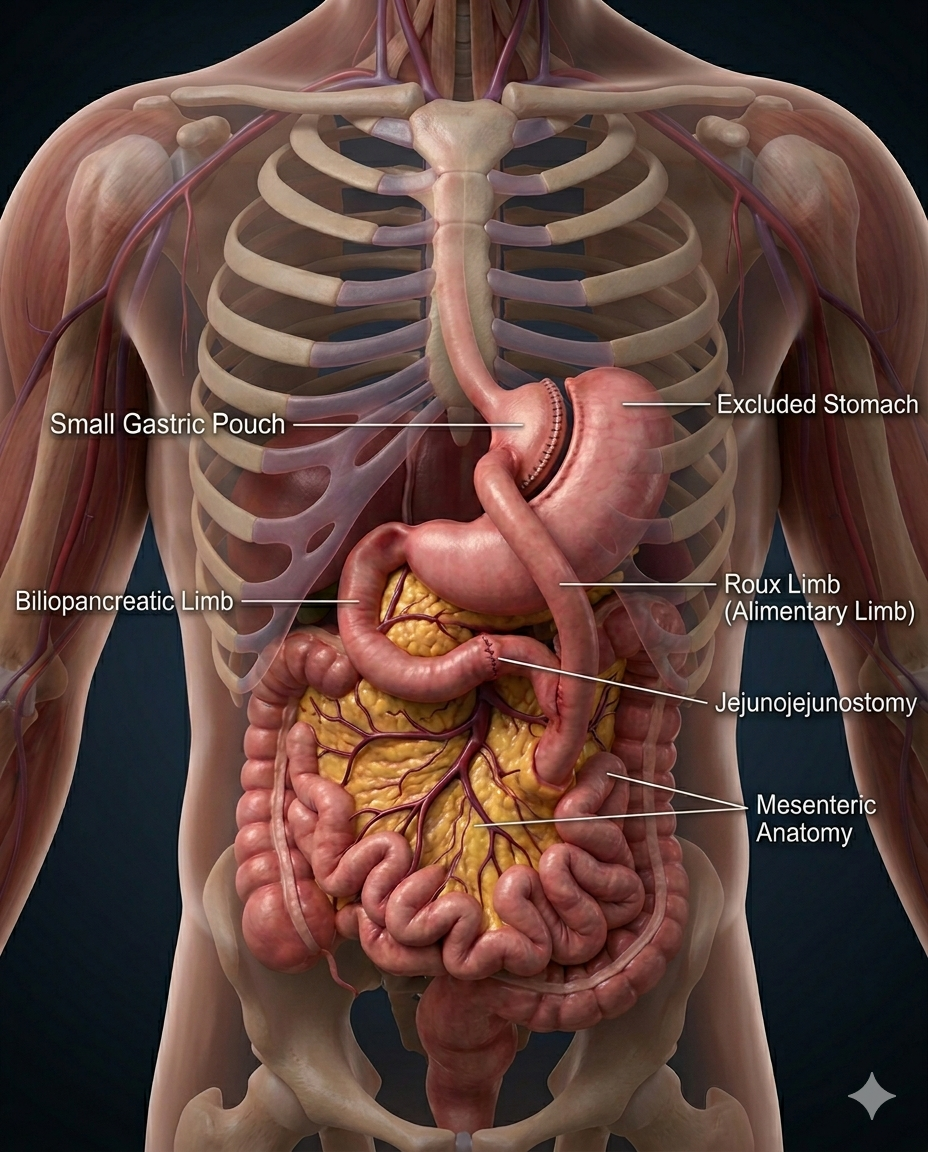
Medical illustration of Roux-en-Y Gastric Bypass Anatomy, small gastric pouch connected to Roux limb of jejunum, excluded stomach visible, biliopancreatic limb and alimentary limb clearly shown, realistic mesenteric anatomy, transparent torso.
Cholecystectomy Digital Module
A guided, interactive, patient-to-professional digital experience that explains gallbladder disease, prepares the patient, maps the operation step by step, and connects anatomy, workflow, devices, risks, and recovery into one usable module.
A cholecystectomy is the surgical removal of the gallbladder, most commonly done laparoscopically for symptomatic gallstones, cholecystitis, or related biliary disease. Laparoscopic surgery is the usual approach, while open surgery may be needed in more difficult or converted cases. Safe identification of the cystic duct and cystic artery using the Critical View of Safety is a core principle in modern cholecystectomy.
-
This module should do four things at once:
1. Educate the patient in plain language
2. Support the surgeon and care team with structured workflow logic
3. Map devices, supplies, and pharma to each phase of the case
4. Create a reusable LDS digital product for web, app, LMS, and sales enablement.
-
A. Module title
Cholecystectomy: A Guided Digital Surgical Experience
B. Module audience
• Patients and families
• Surgeons
• OR staff
• Hospitals
• Device reps
• Pharma partners
• Educators and training programs
-
Patient-Facing Version
What is Bariatric Surgery?
Why weight-loss surgery may be needed
How surgery changes digestion and metabolism
Types of bariatric procedures
Expected benefits and goalsProfessional-Facing Version
Metabolic surgery overview
Indications and evidence
Procedure selection logic
BMI and comorbidity criteria
Outcomes and long-term metabolic impact -
Patient-Facing Version
Stomach anatomy
Small intestine anatomy
How digestion normally works
How bariatric surgery changes food flowProfessional-Facing Version
Upper GI anatomy
Vascular anatomy
Staple line and anastomotic zones
Absorptive physiology and hormonal changesVisual Layer
3D anatomy explorer
Digestive pathway animation
Before-and-after anatomy comparison -
Patient-Facing Version
Obesity and severe obesity
Metabolic syndrome
Diabetes
Sleep apnea
Hypertension
GERDProfessional-Facing Version
BMI classification
Comorbidity burden
Endocrine and inflammatory pathways
Obesity disease progression -
Patient-Facing Version
How doctors determine candidacy
Medical testing
Nutrition evaluation
Psychological evaluation
Insurance approval
Lifestyle preparationProfessional-Facing Version
BMI criteria
ASMBS guidelines
Risk stratification
Cardiac clearance
Pulmonary assessment
Nutrition and behavioral screening -
Patient-Facing Version
Compare Your Options
Sleeve Gastrectomy
Reduces stomach size
Most common procedureGastric Bypass (Roux-en-Y)
Smaller stomach + intestinal rerouting
Adjustable Gastric Band
Restrictive option
Duodenal Switch / SADI
Higher metabolic effect
Robotic vs Laparoscopic Bariatric Surgery
Benefits and differences
Professional-Facing Version
Selection algorithms
Indications by BMI/comorbidity
Revision strategy
Robotic vs laparoscopic workflowBuild Your Surgery™ Layer
Choose:• Sleeve vs bypass vs DS
• Robotic vs laparoscopic
• Technology transparency
• Hospital and surgeon comparison -
Patient-Facing Version
“What Happens to Me?”Arrival and check-in
Anesthesia
Small incisions
Surgical reconstruction
Recovery room
Hospital stay
Discharge home
Professional-Facing Version
Sleeve Gastrectomy Workflow
Positioning
Trocar placement
Liver retraction
Greater curvature mobilization
Bougie sizing
Stapling
Leak testing
Extraction
Closure
Gastric Bypass Workflow
Pouch creation
Roux limb construction
Anastomoses
Leak testingVisual Layer
3D surgery walkthrough
Voice-guided surgery
“Day in the Life of Bariatric Surgery” -
Patient-Facing Version
Safety checkpoints surgeons useLeak prevention
Bleeding prevention
Protecting surrounding organsProfessional-Facing Version
Staple line strategy
Anastomotic integrity
Perfusion assessment
Leak testing
Revision awarenessTechnology Layer
ICG perfusion
Robotic articulation
Staple-line reinforcement -
Patient-Facing Version
What Tools Are Used?Robotic systems
Staplers
Energy devices
Sutures
Imaging toolsProfessional-Facing Version
Platform Options
Robotic systems
Laparoscopic towersCommon Device Categories
Staplers + reloads
Bougies
Energy devices
Liver retractors
Suturing devices
Leak testing equipmentManufacturer Transparency Layer
Device comparison
Technology selection
Rep connection -
Patient-Facing Version
What Medicines Are Used?Before surgery
During surgery
After surgery
Long-term supplementsProfessional-Facing Version
Pre-Op
Diabetes management
GLP-1 considerations
Antibiotics
DVT prophylaxisIntra-Op
Anesthesia
Antiemetics
Pain management
AntibioticsPost-Op
Pain control
PPI therapy
Anticoagulation
Nausea preventionLong-Term
Vitamin supplementation
Iron
Calcium
B12
Nutritional monitoring -
Patient-Facing Version
Possible risks include:Bleeding
Leak
Infection
Blood clots
Stricture
Malnutrition
Need for revisionProfessional-Facing Version
Leak rates
Staple line bleeding
PE/DVT risk
Revisional risk profile
Nutritional complications
Readmission patterns -
Patient-Facing Version
Recovery Timeline
Day 1
Walking and liquidsWeek 1–2
Healing and hydrationWeeks 3–6
Diet progressionMonths 3–12
Weight loss and metabolic changesLife after surgery
Professional-Facing Version
ERAS pathway
Discharge criteria
Diet advancement
Follow-up schedule
Outcome monitoringVisual Layer
Recovery tracker
Milestone timeline
Nutrition progression guide -
Patient-Facing Version
Start My Bariatric JourneyQuestions patients ask:
Am I a candidate?
Which procedure fits me?
How much weight may I lose?
What changes after surgery?
How do I choose a surgeon?Direction™ Layer
ZIP-code surgeon search
Hospital comparison
Robotic availability
Revision capability
Telehealth accessCTA Buttons
Start Learning
Compare Procedures
Find a Bariatric Surgeon
Build My Procedure -
Professional-Facing Version
Surgeon Intelligence
Volume
Revision expertise
Robotic experience
Leak rates
Complex case capability
Hospital affiliation
Patient outcomesFacility Intelligence
Center of Excellence
Technology availability
ICU support
Outpatient pathwaysIndustry Connection Layer
Device participation
Sponsored education
Rep dashboard
Technology adoption tracking
Procedure Builder integrationPatient-Facing Page Structure (Squarespace Ready)
Hero Title
Bariatric Surgery
Learn how weight-loss surgery works and how life changes after surgery.
Hero Message
Understand your options.
Compare procedures.
Choose your path.
Find the right bariatric team.Hero Buttons
Start My Bariatric Journey
Compare Procedures
Find a Bariatric Surgeon
Build My Procedure